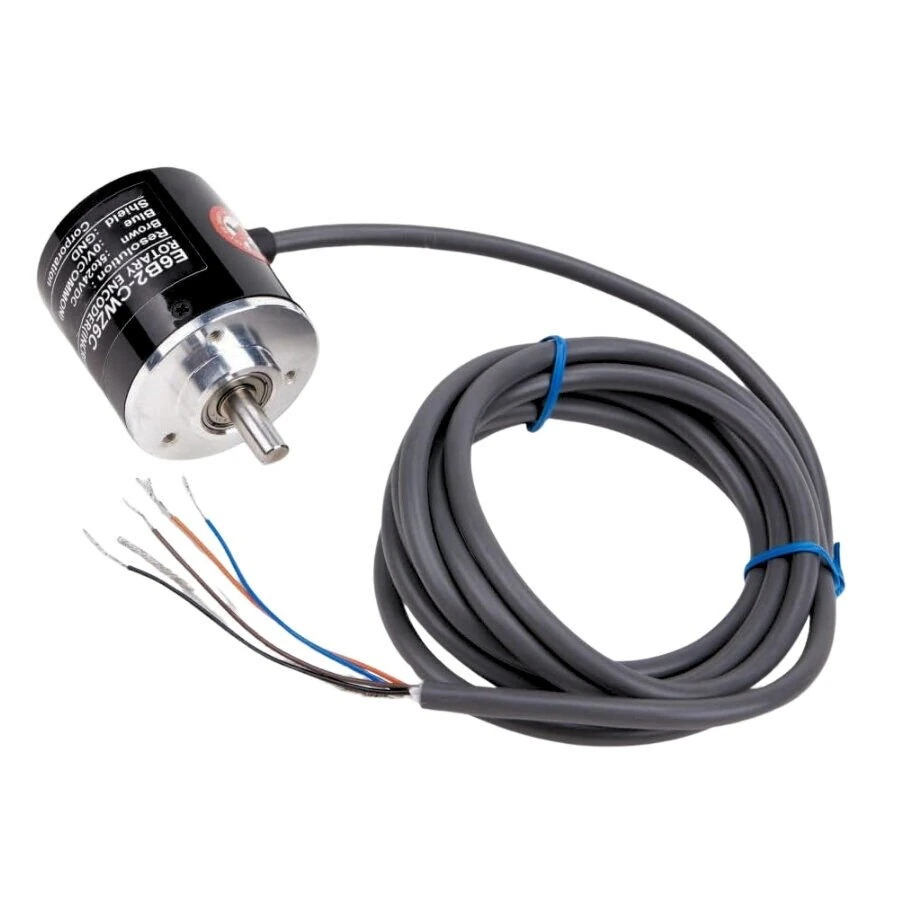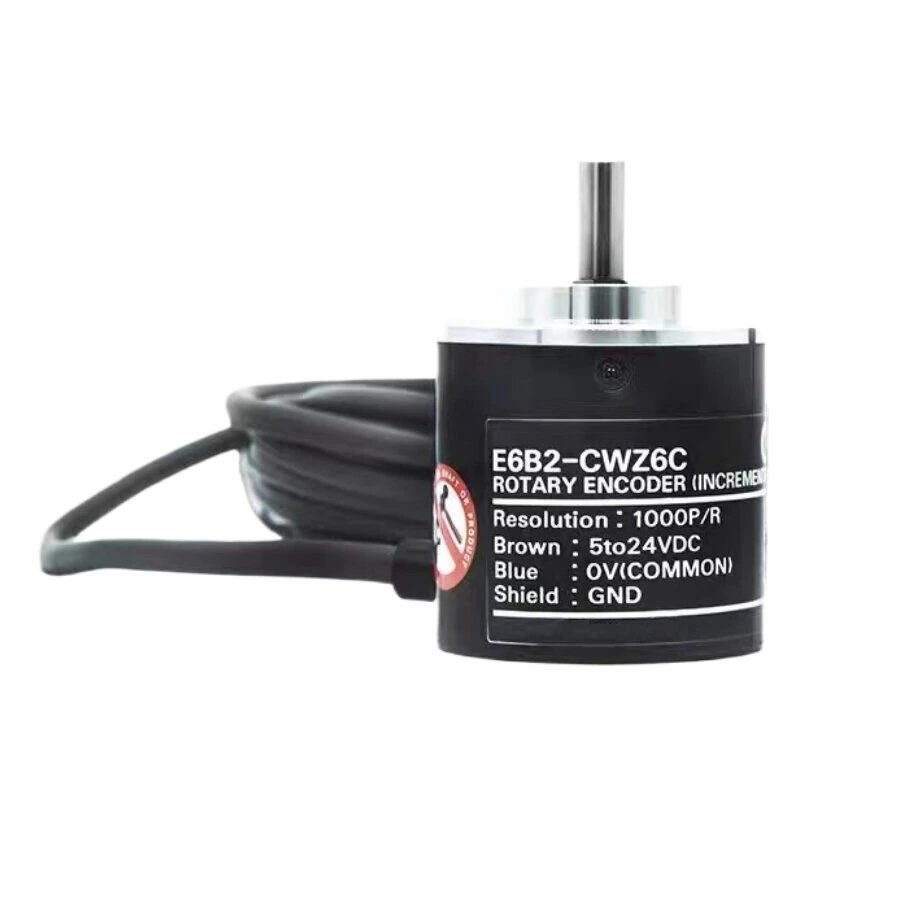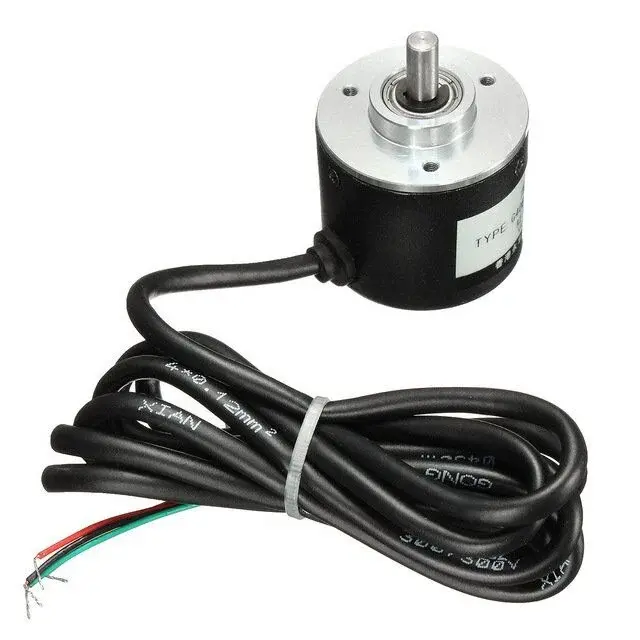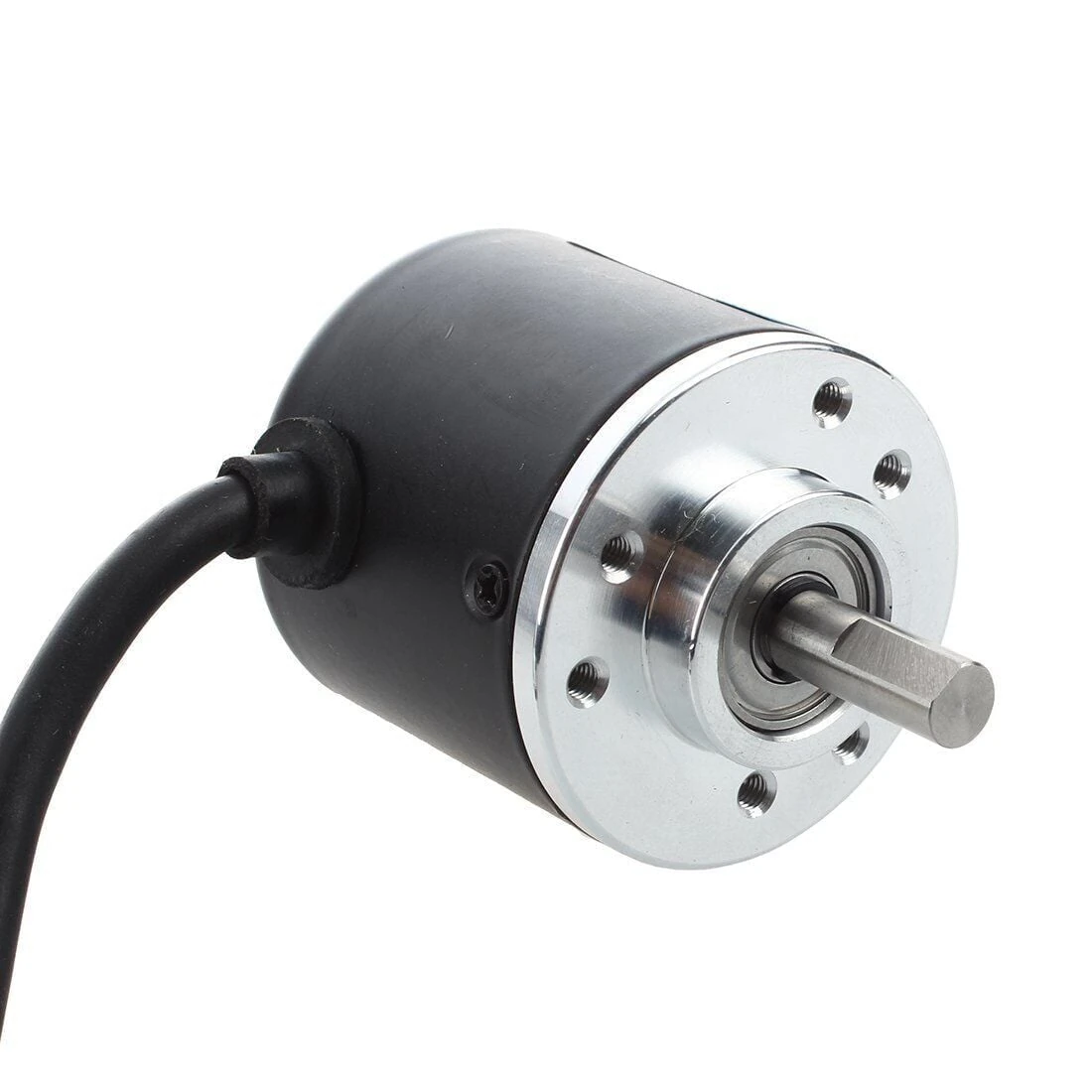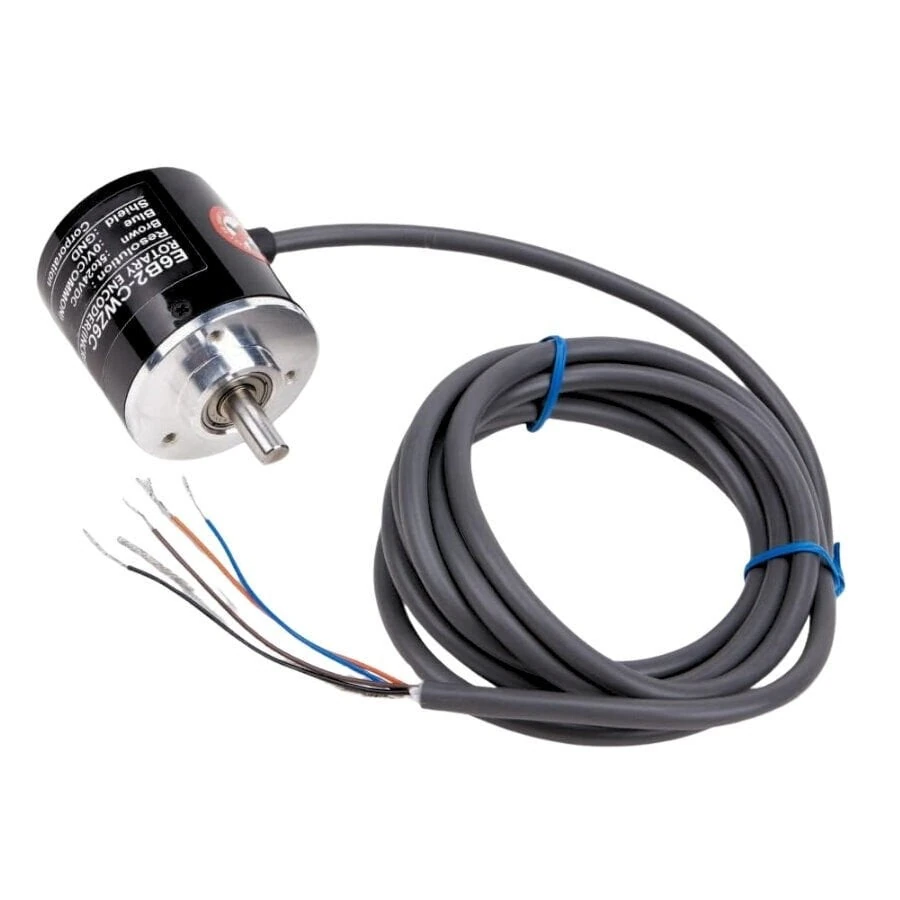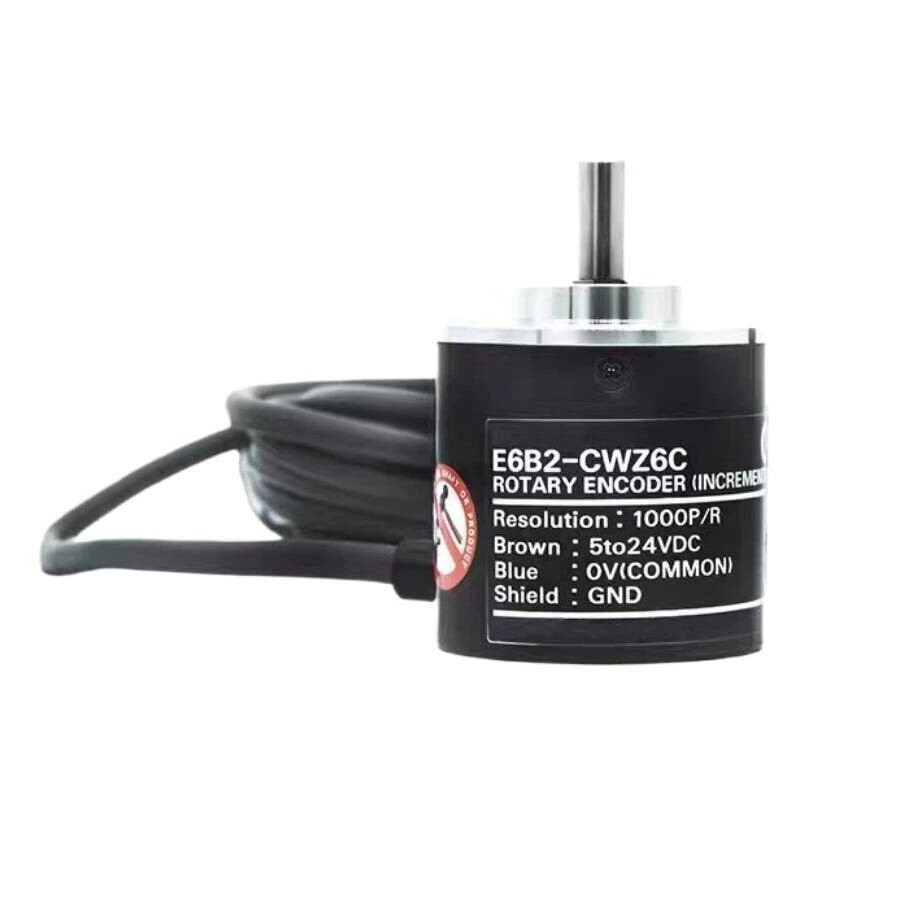
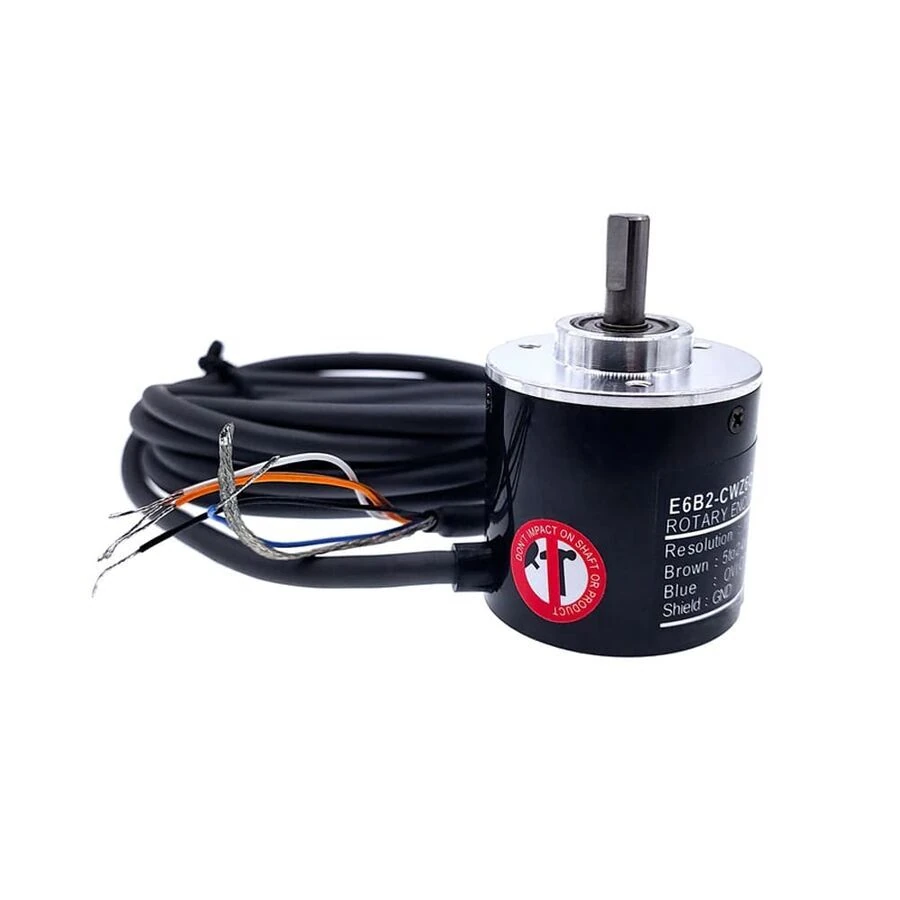
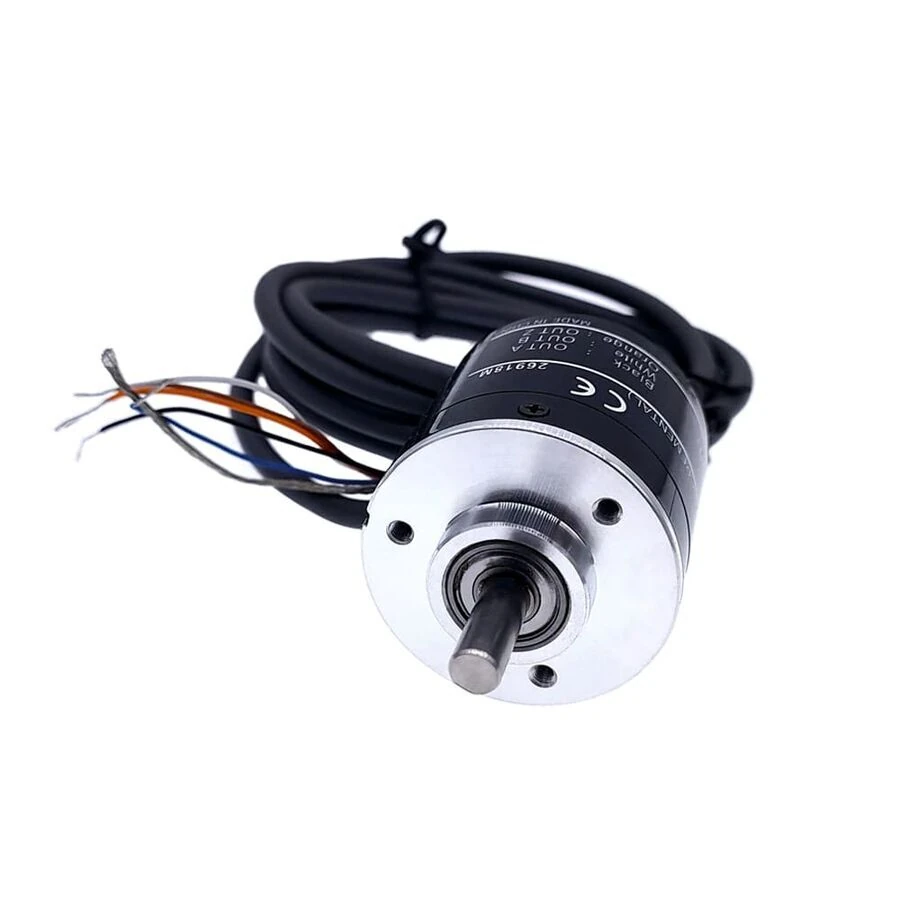
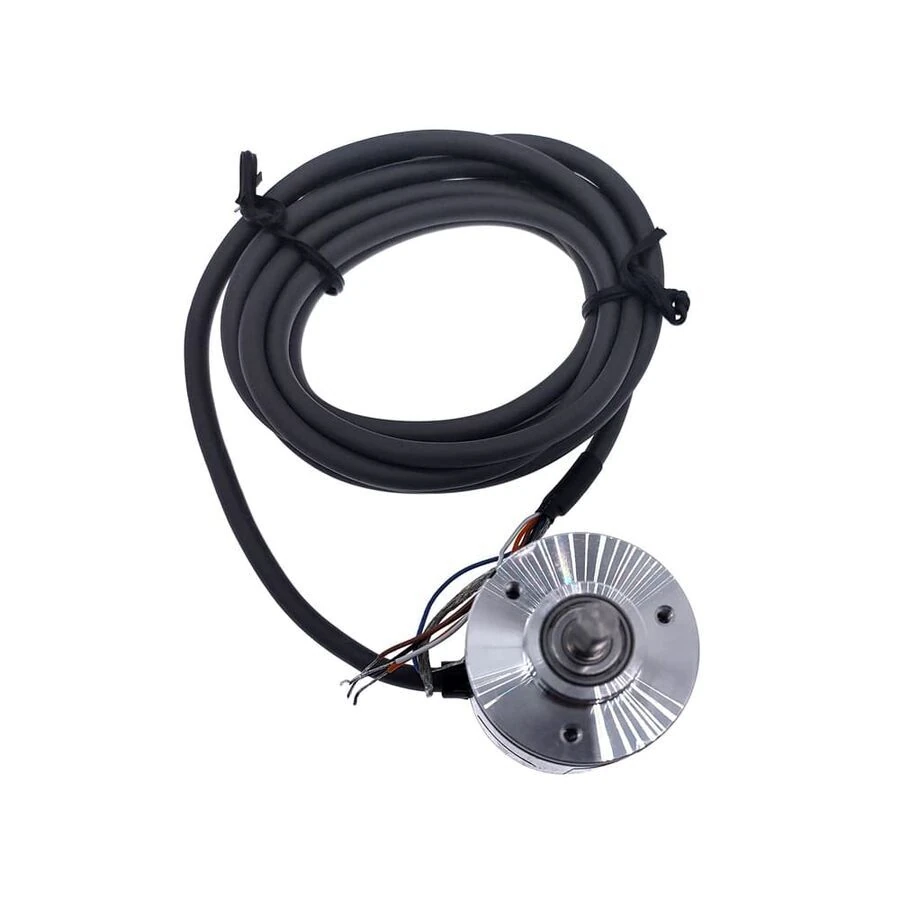
Rotary Encoder E6B2-CWZ6C 2000 Pulses
0 Comment
SKU:
Stock:
$ 22.00
More:Magnetic & Encoder
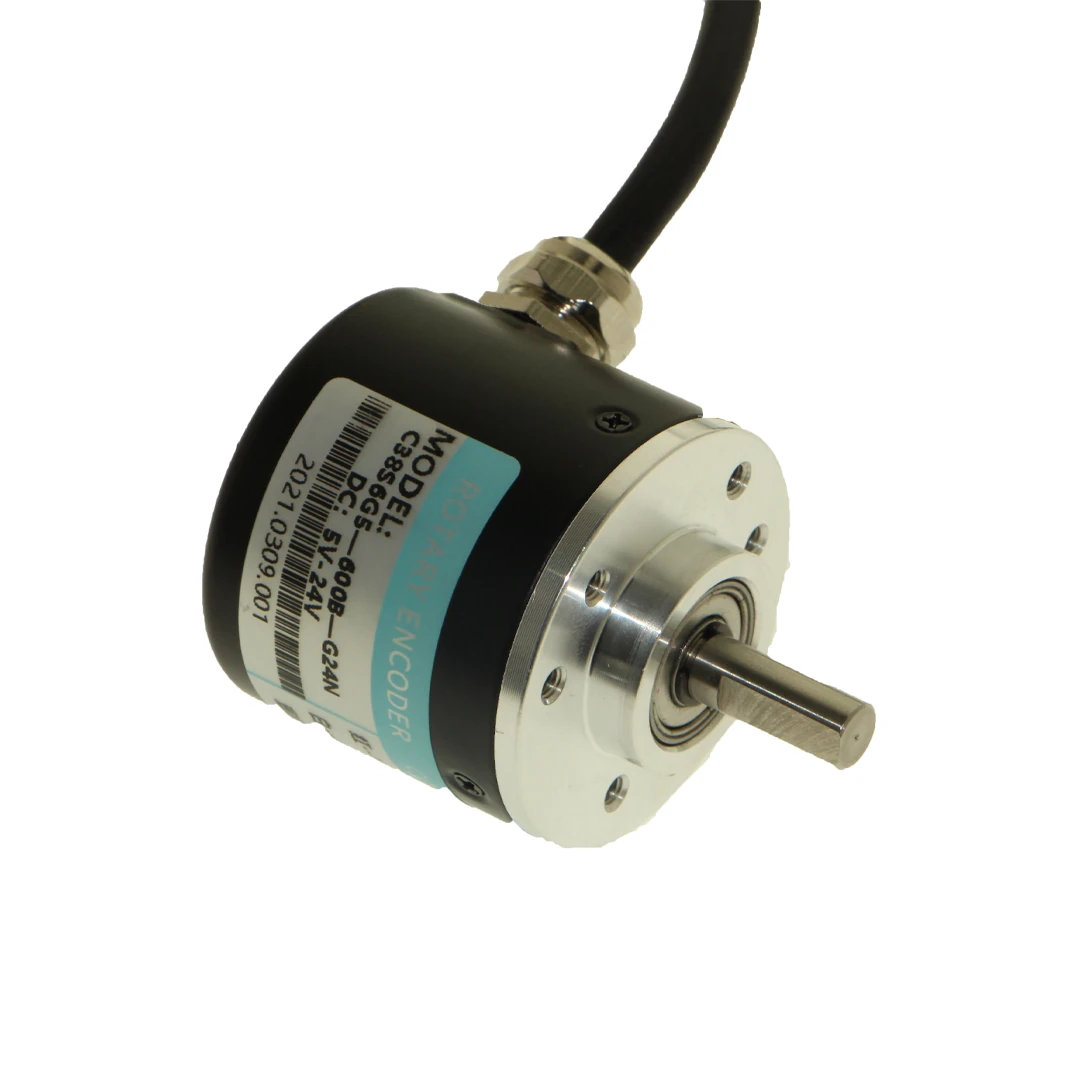
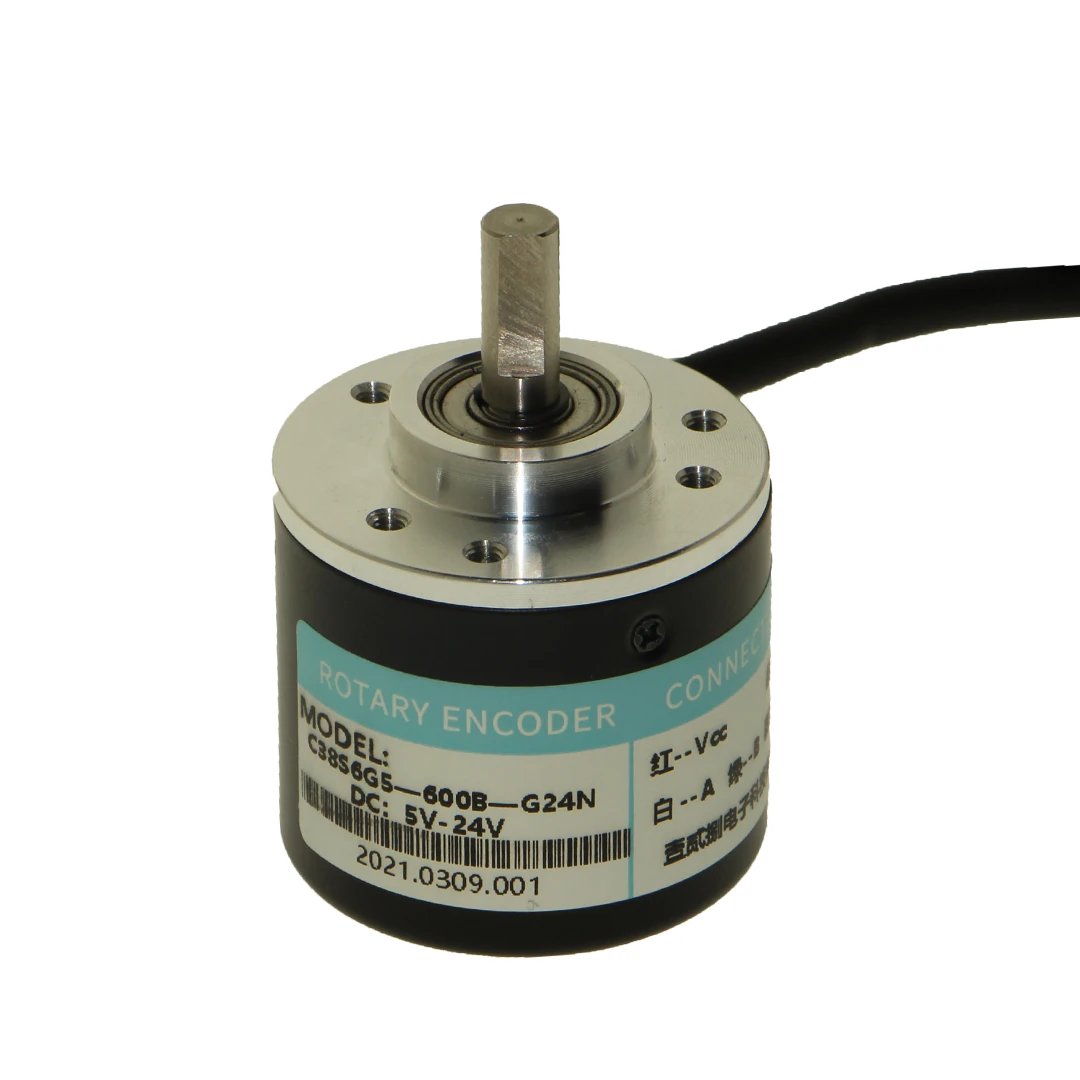
A rotary encoder is an electromechanical device that converts the angular position or motion of a shaft or axle into analog or digital output signals. This model is incremental and operates with a 5–24V DC supply voltage, capable of reaching a short-term maximum speed of 6000 RPM.
Technical Specifications:
- Input Voltage: 5–24V DC
- Pulses: 2000
- Maximum Instantaneous Current: 80 mA
- Output Circuit Configuration: NPN open collector output
- Maximum Response Frequency: 100 kHz
- Phase Difference Between Outputs A and B: 90 ± 45°
- Maximum Inertia Moment: 1×10⁻⁶ m²
- Rotation Speed: 6000 RPM
- Shaft Load (Radial / Axial): 30 N / 20 N
- Operating Temperature: -10°C to 80°C
Important Usage Notes:
- Do not use the product above its nominal voltage. Exceeding the voltage range may damage or destroy the encoder.
- Avoid running wires in parallel with high-voltage or power lines, as induction can cause malfunction or damage.
- When turning power on or off, allow at least 1.0 second before or after to operate devices connected to the encoder to avoid improper surges.
- Ensure correct polarity when wiring; incorrect wiring can burn the product.
- Do not short-circuit the load, as this may damage the encoder.
- Keep the product away from water or oil.
- If the product is mounted with a cable, do not pull the cable with a force exceeding 29.4 N.
- When attaching or removing the coupling, avoid excessive squeezing or pulling force.